01 — The situation
Drafts still get judged as finished emails
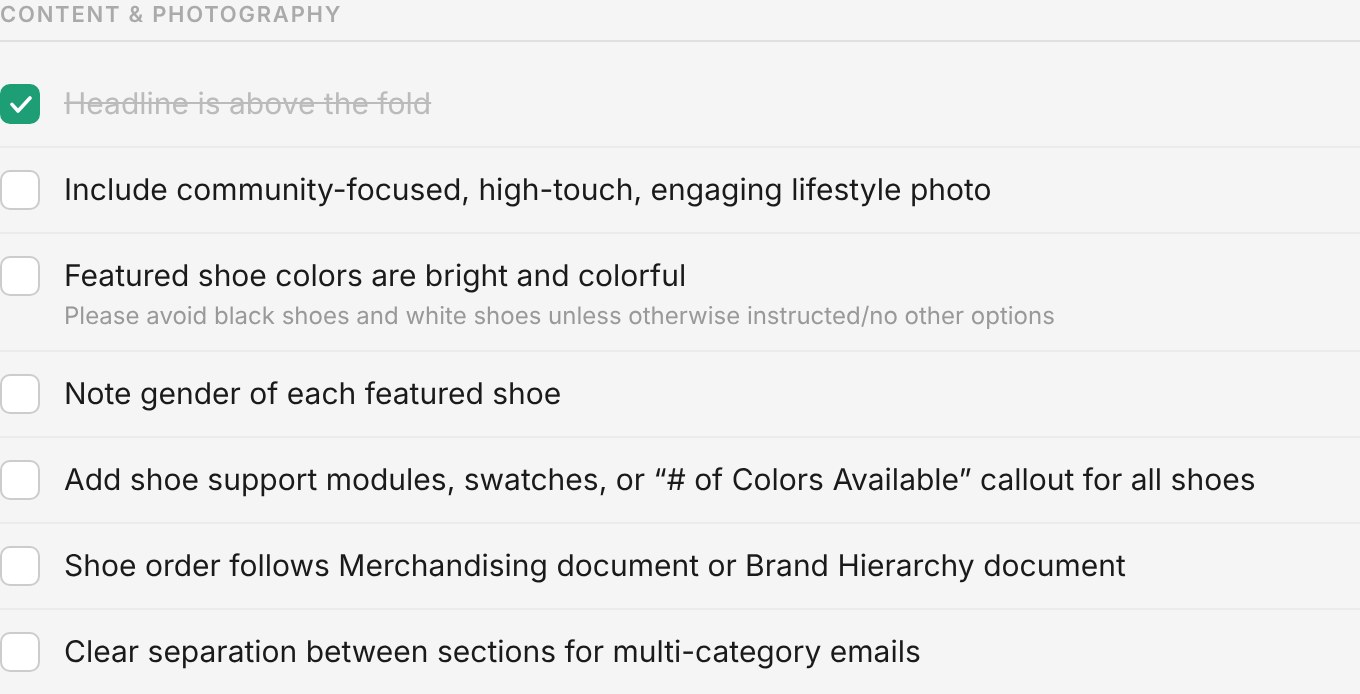
We have regular review meetings with our owner and CEO. He has high standards, and his idea of what makes a good email changes over time. Even when we presented work as a draft, the feedback usually wasn't about the design direction. It was about what was missing: how many colors a shoe comes in, whether a shoe was men's or women's, what the subject line was.
None of these were big mistakes, but they kept coming up. Each designer heard a slightly different version of the feedback in a different meeting, and most of what we'd learned lived in people's heads. When the standard changed, there was nowhere to record the new one.
The problem wasn't careless work. The standards just weren't written down anywhere.
02 — The idea
Turn feedback into a checklist
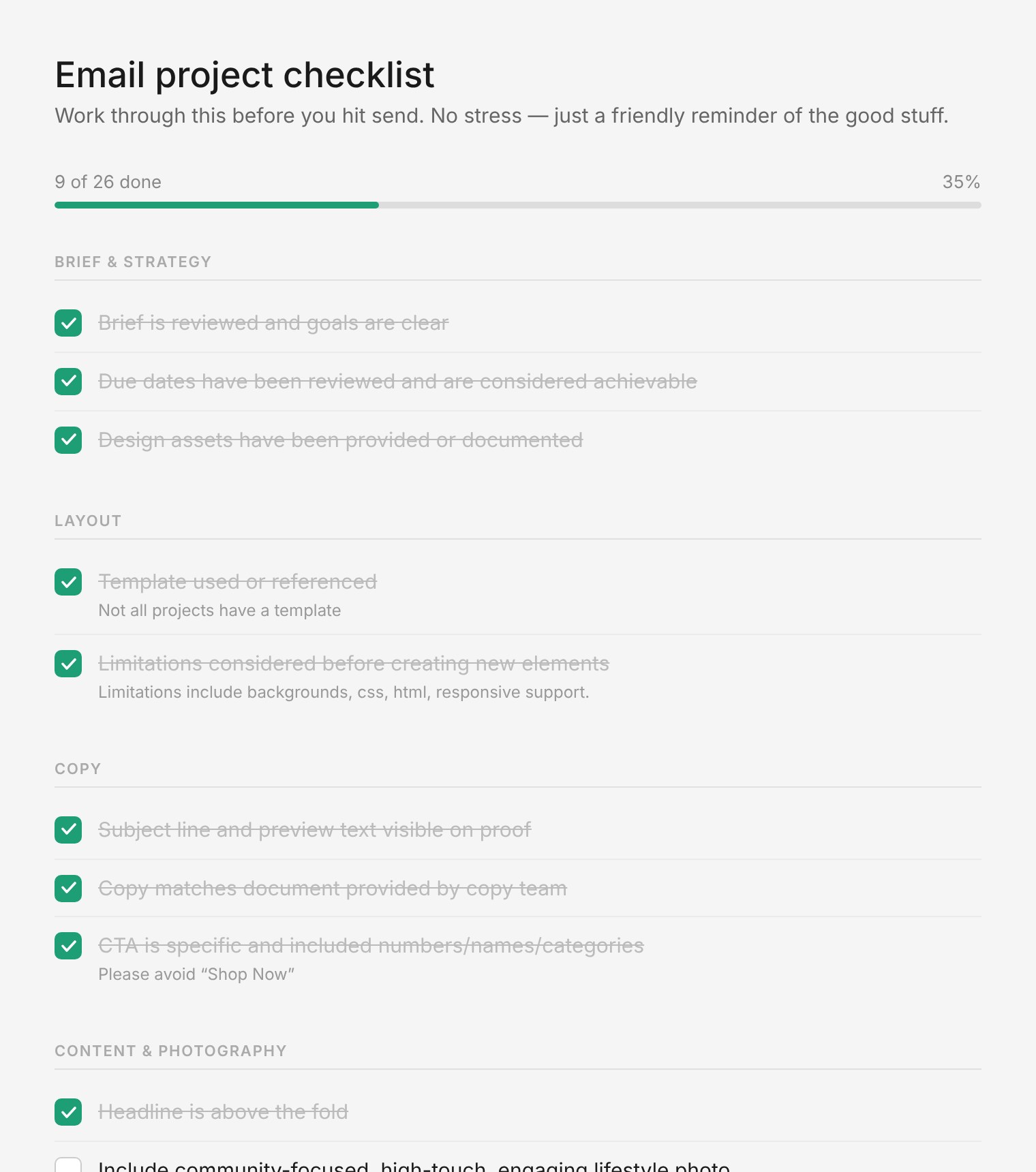
I wanted one shared place that answered "what does a finished email need?" for anyone on the team. It had to be quick to use in the middle of a project and easy to update the next time expectations changed. I didn't want a policy document. A checklist people dread doesn't get used, so the tone stayed friendly: "No stress — just a friendly reminder of the good stuff."
The sections follow the order a project actually moves through, from the brief to the send:
- Brief & strategy
- Layout
- Copy
- Content & photography
- Approval
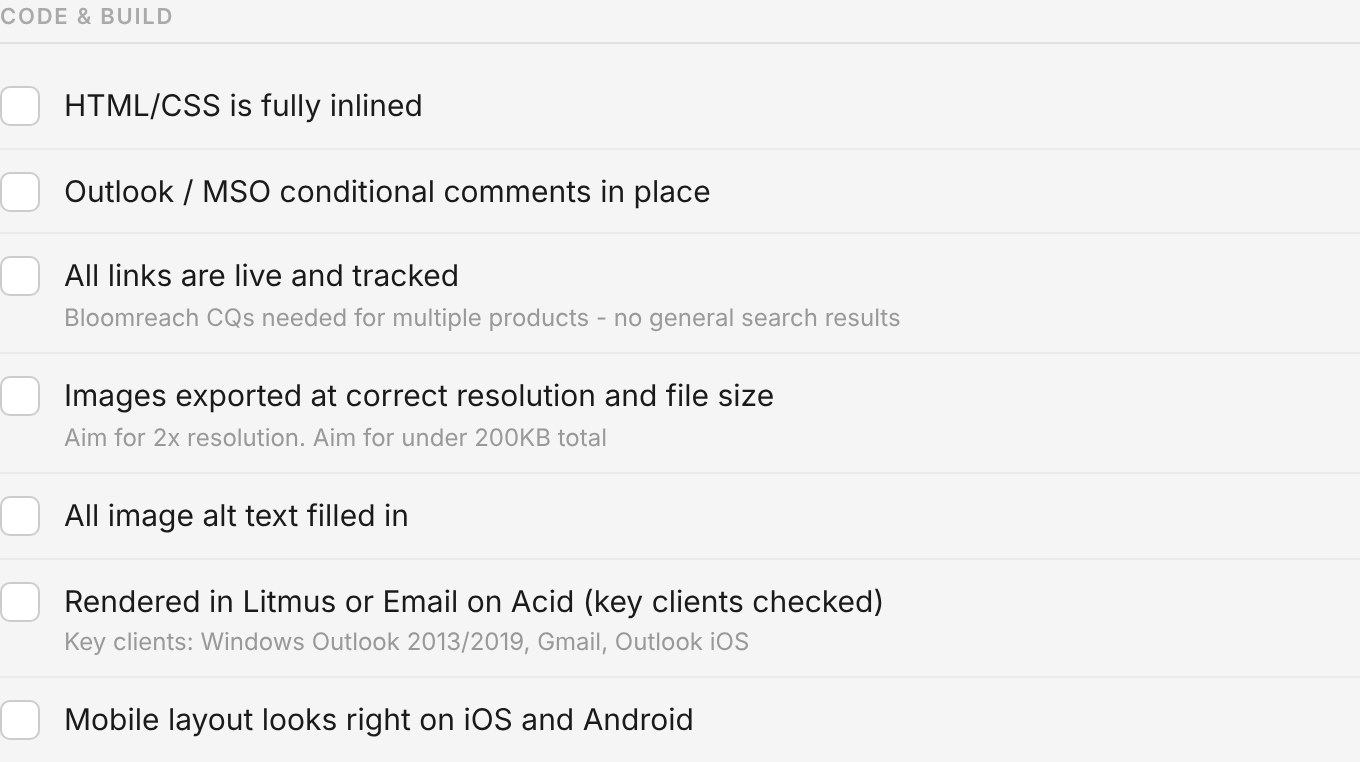
- Code & build
- Launch
The most useful parts are the notes under some items. Each one records the standard behind the item, so the next person doesn't need to have been in the meeting where it was decided.
03 — The build
Simple enough not to break
It's a single HTML file with no framework, backend or login. Checking an item updates a progress bar, and Reset clears it for the next project. Nothing is saved, on purpose: there's no database to maintain and no stale state from someone else's last project. The items live in one plain list in the code, so adding a standard or rewording an item takes a minute.
It also lives in our Litmus account, so reviewers see the same list alongside the email proofs.
04 — How it's used
A reason to slow down
Designers use it most, and the biggest benefit comes at the start of a project, not the end. Going through the brief and layout sections early shows what's missing while there's still time to ask, so questions go back to whoever wrote the brief instead of coming up in a review.
It also slows people down, in a good way. Taking a minute to review before building catches the things that would otherwise turn into revision notes.
The list is never finished. When a new request or standard comes up, it gets added, and I update one file instead of explaining the change to everyone separately.
05 — The outcome
Fewer revisions, fewer surprises in the room
Projects now go through fewer revision rounds. The CEO's direct feedback about missing pieces (the colors, men's vs. women's, the subject line) has mostly stopped.
That's the result I care about most. The checklist doesn't make anyone a better designer. It just means everyone starts from the same, current definition of done.